


he findings are part of a Comptroller and Auditor General (CAG) audit of passenger amenities and sanitation at 512 non-suburban railway stations across 16 railway zones.
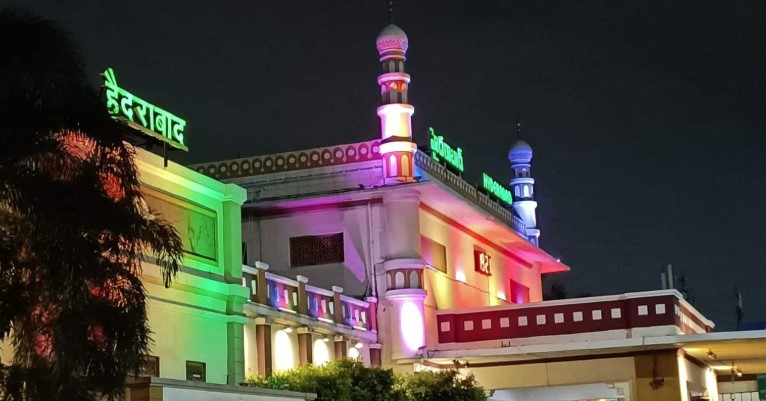
Hyderabad: The city’s three major railway stations have failed a national audit of passenger amenities, with a water sample from Nampally testing positive for E. coli and inspectors flagging shortages of drinking water, toilets and signage across Nampally, Secunderabad and Kacheguda.
The findings are part of a Comptroller and Auditor General (CAG) audit of passenger amenities and sanitation at 512 non-suburban railway stations across 16 railway zones. It found that 458 stations, or more than 89 percent, fell short on at least one minimum essential amenity (MEA), facilities Indian Railways was required to provide at every station by August 2018.
At Nampally, auditors recorded shortfalls in drinking water taps, urinals and signage, according to a report by The Times of India. The station’s water problem went further. A sample drawn from a water cooler tested positive for E. coli. CAG also found that bacteriological testing of drinking water was not carried out at several stations, and was not conducted at the prescribed frequency where it was.
Secunderabad, one of South Central Railway’s (SCR) top earners with annual earnings of about Rs 1,147 crore and footfall of 2.69 crore, was found deficient in water coolers, dustbins and signage. It featured on CAG’s list of 10 high-revenue, high-footfall stations nationally that failed to meet MEA norms in full.
Zone-wide, SCR fared little better; seven stations had deficient drinking-water taps, eight fell short on water taps overall, and 20 did not provide dustbins as required. Platform shelters and other passenger facilities were also found lacking at several SCR stations.
Upkeep was as much a problem as provision. Auditors found unhygienic toilets or urinals at four SCR stations, water shortages in toilet taps at two, and unclean toilet seats at five. Complaint or suggestion registers were missing from toilet blocks at 15 stations, receipts for toilet user charges went unissued at 13, and ‘no-smoking’ boards were absent from toilet blocks at 29 stations.
The CAG report itself, examined separately, points to deeper gaps within SCR. The zone recorded some of the weakest numbers in the country on accessibility for Divyangjan (differently-abled) passengers; 29 SCR stations lacked standard ramps with railing for barrier-free entry, among the highest shortfalls of any zone, while all 32 SCR stations assessed lacked a Divyangjan-accessible water tap on alternate platforms, tying it for the worst performance nationally. SCR stations also showed shortfalls in platform-shelter coverage for general-second-class coach boarding points at 19 stations, and in the gap between foot-over-bridge covers and platform shelters at 28 stations.
The zone’s spending pattern showed a similar mismatch between funds and outcomes. CAG’s records show SCR under-spent its allotted budget for passenger amenity works in most years between 2019-20 and 2023-24, even as deficiencies persisted. For instance, spending only about Rs 150 crore of a Rs 228 crore allocation in 2019-20. Nationally, the audit found that passenger-amenity budgets went underutilised by 36 percent to 44 percent every year over the same five-year period, and that 59 percent of passenger amenity works surveyed nationwide were delayed, in some cases by more than four years.
In response to the water-safety findings, Railways has announced a “tank-to-tap” overhaul, planning new filtration systems at 20,000 locations including water coolers, along with tank replacement, centralised quality monitoring and periodic public reporting. “The issue will be treated as a priority and monitored at the Railway Board level as part of a broader effort to address the CAG’s observations and improve passenger amenities,” a senior SCR official was quoted by TOI.


comments


Other categories
Recent Comments