


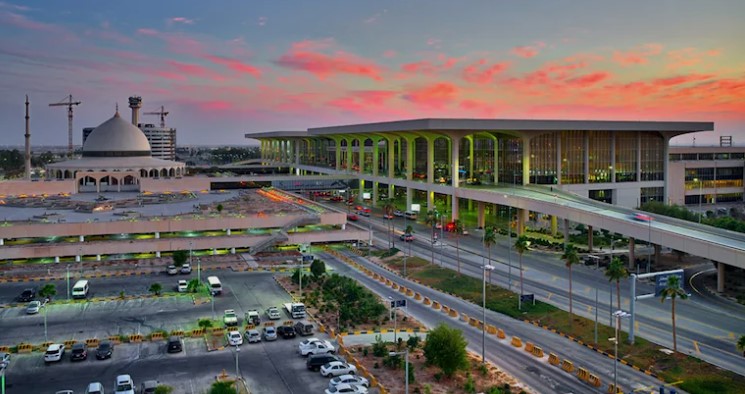
Despite holding the world record for land area, it is not among the busiest airports globally, making it a fascinating piece of trivia for aviation enthusiasts.
Airports are usually known for the passengers they serve or the destinations they connect. But one airport has earned worldwide attention for a very different reason: its extraordinary size. Covering 776 square kilometres, this aviation hub holds the record as the world's largest airport by land area. Even more remarkably, only a fraction of that vast site is used for day-to-day airport operations, and this also happens to be larger than Bahrain, which extends to 727 square kilometers, as per the U.S. Department of States. So, where is this giant airport, and why was it built on such an enormous scale?
Located near Dammam in Saudi Arabia's Eastern Province, King Fahd International Airport covers approximately 776 square kilometres and remains the largest airport in the world by total land area. The airport opened for commercial operations in 1999 and was planned on a scale rarely seen in modern aviation.
To understand its size, consider this: Mumbai covers roughly 603 square kilometres, meaning the airport occupies a larger area than India's financial capital.
Unlike many major airports that expand in phases as demand grows, King Fahd International Airport was designed with substantial room for future development from the outset.
Its footprint was intended to accommodate:
- additional runways
- terminal expansions
- cargo and logistics facilities
- aviation support infrastructure
- operational buffer zones
This approach ensured the airport would have the capacity to support growth for decades without facing major space constraints.
Despite its immense size, only a relatively small section of the airport contains the terminals, runways and facilities travellers use today. Large portions of the site remain reserved for infrastructure and development projects, making it one of the most unusual airport layouts in the world.
What Makes It Unique?
Its scale is unmatched in global aviation. King Fahd International Airport is several times larger than Denver International Airport in the United States, the second-largest airport in the world by area. The difference is so significant that no other airport comes close to its footprint.
Viewed from above, the airport appears as a small cluster of developed facilities surrounded by vast stretches of desert, highlighting the ambitious vision behind the project.Interestingly, the airport's fame comes from its size rather than passenger traffic. Despite holding the world record for land area, it is not among the busiest airports globally, making it a fascinating piece of trivia for aviation enthusiasts.
By Air: Fly directly to King Fahd International Airport, which is connected to numerous domestic and international destinations.
By Road: The airport is located about 35 kilometres from central Dammam and is easily accessible by taxi, ride-hailing services and private vehicles.
So, larger than Mumbai in area and unmatched anywhere else in the aviation world, King Fahd International Airport remains one of the most remarkable examples of how ambitious airport planning can be.


comments


Other categories
Recent Comments