


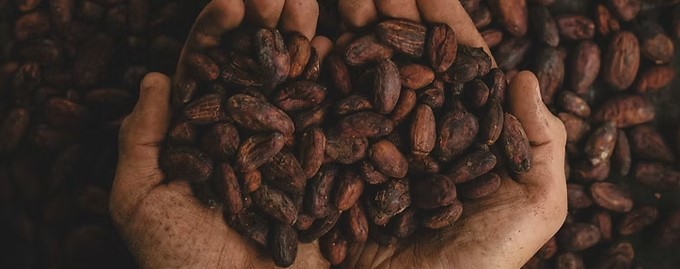
FoodBev Media’s Rafaela Sousa visited Cargill’s cocoa processing facility in York, UK, to see how the company is combining the city’s long chocolate-making heritage with automation, digital monitoring and artificial intelligence
York’s association with cocoa stretches back more than two centuries. The city’s chocolate story began with Mary Tuke, who opened a grocery shop selling cocoa drinks in the 18th century, before names including Kit Kat and Terry’s helped establish York as one of the UK’s best-known chocolate-producing cities.
Today, that history continues at Cargill’s cocoa processing facility, where cocoa beans are cleaned, separated, roasted and ground into cocoa liquor for use by chocolate manufacturers in the UK and elsewhere.
The nibs move into the roasting stage, where closely controlled temperatures are used to develop their flavour. They then pass through a series of grinding stages, gradually changing from a solid material into liquid cocoa liquor.
Some of the liquor produced in York is supplied to Cargill’s chocolate facility in Worksop, Nottinghamshire. There, it is combined with ingredients including cocoa butter, sugar and, depending on the recipe, dairy components to produce bulk dark, milk and white chocolate.
The York plant does not produce finished chocolate bars. Instead, it carries out the early processing stages that turn imported cocoa beans into the dark, intensely flavoured ingredient at the heart of chocolate production.One of the newest additions to the York facility is an artificial intelligence-supported camera system used during the bean-cleaning and separation stages.
Near-infrared cameras inspect material as it moves through the line, helping to distinguish cocoa beans from material that should be removed.
“The cameras make sure that everything we’re sending forward is clean beans,” Thompson explained. “That feeds back to our operators, so if there is anything going forward that we don’t want, they can adjust the settings.”
The nibs move into the roasting stage, where closely controlled temperatures are used to develop their flavour. They then pass through a series of grinding stages, gradually changing from a solid material into liquid cocoa liquor.
Despite the scale of the equipment inside the facility, the main production process can be overseen by a relatively small operating team.
“Between two and three operators can run this factory, no problem,” Thompson said. “We have three technicians as well to work with the operators in case there is an electrical fault or something the operator can’t solve.”
One of the newest additions to the York facility is an artificial intelligence-supported camera system used during the bean-cleaning and separation stages.
“The cameras make sure that everything we’re sending forward is clean beans,” Thompson explained. “That feeds back to our operators, so if there is anything going forward that we don’t want, they can adjust the settings.”
The information could also be incorporated into Cargill’s performance reporting, helping the team examine how much material met the required specifications and identify potential improvements.
We’re going to utilise all the technology we can to try and make it more efficient, have better quality and deliver a better product for our customers,” he added.
Maintaining quality through automation
At York, controlled roasting temperatures help develop the cocoa’s flavour, while digital monitoring supports greater consistency throughout production.
This is particularly relevant during a period of volatility in the cocoa market, when manufacturers are placing greater emphasis on operational reliability and making effective use of available raw materials.
Emiel van Dijk, senior vice president and managing director of Cargill’s cocoa and chocolate business in Europe and West Africa, said maintaining supplies to customers had been one of the company’s major priorities during the recent disruption.
At the end of the visit, the group was invited to taste the cocoa liquor produced at the facility.
Although it smelled recognisably like chocolate, its flavour was much stronger and more dry and bitter than a finished confectionery product.


comments


Other categories
Recent Comments