


Every memorable shopping experience begins long before the doors open. For every customer, the day begins at the entrance; for the operations team, it began hours earlier. Between those two moments lies an invisible world of preparation, precision and teamwork that ultimately defines the customer experience.
The First Customer of the Day
At precisely 10 o'clock on a Saturday morning, the first customer walks into a shopping centre. She pauses briefly at the entrance as security welcomes her before stepping into the cool comfort of a bustling atrium. The polished floors gleam under warm lighting, soft music fills the common areas, escalators glide effortlessly between levels and digital directories quietly guide visitors to their destinations. From the cafés, the aroma of freshly brewed coffee drifts through the mall, adding to the anticipation of another busy trading day. Everything appears effortless, almost as though the shopping centre has simply awakened moments before she arrived.
What she cannot see is that the day actually began several hours earlier. Long before the first shopper crossed the threshold, engineers had inspected elevators and escalators, technicians had tested lighting, air-conditioning and life-safety systems, housekeeping teams had completed their final rounds, parking operations had been readied, retailers had replenished merchandise, visual merchandising teams had perfected store displays and operations managers had quietly walked every floor, ensuring that every touchpoint was ready for the day ahead. Hundreds of routine yet critical activities had already been completed, each contributing to an experience that customers would soon take for granted.
This, perhaps, is the paradox of operational excellence. When every process works exactly as it should, customers rarely notice the effort behind it—and that is precisely the objective. They do not visit a shopping centre to admire preventive maintenance schedules or flawlessly executed standard operating procedures. They come to shop, dine, watch a movie, meet friends, entertain their children or simply spend a pleasant afternoon. What they remember is not the work that went into creating the experience, but the feeling the experience leaves behind. The finest operations are therefore almost invisible, not because little is happening, but because thousands of details have come together so seamlessly that customers notice only the outcome, never the effort behind it.
The Unforgiving Nature of Retail
The previous day may have been one to remember. The shopping centre could have recorded its highest footfalls of the month, retailers might have celebrated exceptional sales, the food court may have been packed from lunchtime until closing, cinemas sold out every show and social media filled with photographs of families enjoying another memorable weekend. In the management office, dashboards may still be displaying impressive numbers, reinforcing the satisfaction of a successful trading day and encouraging teams to celebrate another milestone.
Yet, when the doors open the following morning, none of those achievements accompanies the first customer through the entrance. She knows nothing about yesterday's sales, footfalls or awards. Her opinion of the shopping centre will be shaped entirely by the experience that unfolds before her. If parking takes longer than expected, if the washrooms are untidy, if an escalator is out of service, if wayfinding is confusing or if she cannot find someone willing to help, yesterday's achievements quickly lose their significance. Retail is perhaps one of the few industries where every trading day begins with a clean slate. A strong reputation may persuade customers to visit, but it cannot guarantee their satisfaction. Every visit becomes a fresh evaluation, every interaction another opportunity to strengthen—or weaken—the trust that has taken years to build.
Customers don't experience yesterday's reputation.
They experience today's execution.
For shopping centres, this challenge is even greater because customers experience dozens of touchpoints during a single visit. From parking and security to shopping, dining, entertainment and customer service, every interaction quietly contributes to the overall perception of the destination. A single operational lapse can overshadow an otherwise enjoyable day, while consistent excellence across every touchpoint reinforces confidence and encourages customers to return. Reputation, therefore, is never a permanent asset. It must be earned again with every opening, every customer and every trading day.
Every Day Is a New Innings
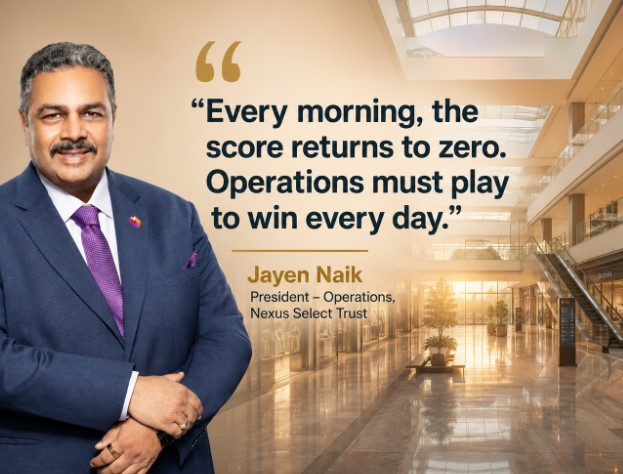
It was during a recent SCAI Masterclass that Jayen Naik, President – Operations, Nexus Select Trust, captured this reality in a single sentence that deserves to resonate far beyond the operations function. "Every morning, the score returns to zero. Operations must play to win every day." To explain the philosophy, he turned to one of India's greatest sporting icons—Sachin Tendulkar.
No cricketer has accumulated more international centuries than Sachin, yet every time he walked onto the field, the scoreboard still displayed zero. His extraordinary achievements gave him confidence, but they never earned him a single run in the next innings. Every match demanded fresh discipline, complete focus and flawless execution. Jayen believes shopping centres operate in much the same way. Yesterday's customer satisfaction cannot compensate for today's operational lapse. A retailer celebrating record sales last weekend still expects seamless operational support this weekend, while a family searching for a clean washroom or a shopper struggling to find a store judges the destination only by what they experience today. In retail, every trading day is a new innings and every customer presents another opportunity to earn trust, reinforce loyalty and demonstrate that operational excellence is not a past achievement but a daily commitment.
Why the World's Best Never Stop Preparing
Although Jayen Naik articulated his philosophy in the context of shopping centres, its relevance extends far beyond retail. Across industries, the world's most admired organisations share one defining characteristic—they refuse to let yesterday's success become today's complacency. Former Intel Chairman Andy Grove famously warned that success often becomes the greatest obstacle to future success because it creates a false sense of security. The Japanese philosophy of Kaizen echoes the same belief, advocating relentless, incremental improvement rather than occasional breakthroughs. Excellence, in this philosophy, is not a destination but a continuous process of refining, learning and improving every single day.
The same discipline is visible across organisations renowned for consistently delivering exceptional customer experiences. Every morning, Disney's theme parks prepare for the day's first family with the same care and precision they would for the millionth visitor. Singapore Changi Airport has built its global reputation not merely on iconic architecture or advanced technology, but on an uncompromising commitment to operational consistency—from immaculate terminals and intuitive wayfinding to efficient baggage handling and attentive customer service. Luxury hospitality brands such as The Ritz-Carlton and Taj Hotels follow a similar philosophy, recognising that memorable guest experiences are rarely created through grand gestures alone. More often, they are shaped by hundreds of thoughtful interactions that quietly reassure guests that every detail has been anticipated.
Shopping centres are increasingly expected to perform at the same level. Customers no longer compare one mall only with another. Their expectations are shaped by every outstanding experience they have elsewhere—whether it is the effortless convenience of a world-class airport, the warmth of a luxury hotel, the speed of quick commerce or the seamless simplicity of digital payments. Every positive experience outside retail silently raises the benchmark for retail itself.
The Invisible Engine Behind Every Great Shopping Centre
As shopping centres evolve from places to shop into destinations where people dine, work, socialise, celebrate and spend time with family, operations has quietly become one of the industry's most important strategic differentiators. The conversation is no longer limited to tenant mix, architecture or marketing campaigns. Increasingly, the real competitive advantage lies in something customers rarely notice—the ability to deliver a consistently seamless experience across every stage of their visit.
From the moment a vehicle enters the parking area until the customer leaves the mall, dozens of operational touchpoints influence the overall experience. Security, housekeeping, lighting, temperature, ambience, digital navigation, maintenance, retailer support, food court operations and customer service together create an invisible network that shapes perceptions far more than customers consciously realise. When every element works in harmony, the experience feels effortless. When even one of them fails, the entire journey is affected.
Perhaps that is why Jayen describes operations as the "Ace" in the deck. It is the one function that connects every stakeholder within the shopping centre ecosystem—customers, retailers, employees, service partners, contractors and the community around it. It begins before the doors open and continues long after the final customer has left, quietly preparing for another day when the score will once again return to zero.
From Managing Facilities to Creating Experiences
One of the most significant shifts in modern retail is that operations can no longer be viewed simply as the function responsible for maintaining buildings. Today's operations teams are increasingly expected to create experiences, anticipate customer needs and support retailers in delivering exceptional service.
Jayen repeatedly emphasised that customers rarely remember the names of the people they meet, but they almost always remember how those people made them feel. A warm greeting at the entrance, a parking attendant patiently assisting an elderly visitor, a housekeeping associate responding immediately to a spill or a customer service executive walking a shopper to the right store are all seemingly small gestures. Yet these moments often shape the emotional memory of a shopping centre more profoundly than architecture, promotions or advertising campaigns.
The same philosophy applies to retailers. Rather than viewing them merely as tenants occupying leased space, operations must recognise them as partners whose success directly contributes to the success of the destination itself. Helping retailers replenish merchandise during a major promotion, coordinating maintenance without disrupting business or resolving operational bottlenecks before they affect customers are all examples of how operational excellence extends beyond infrastructure to enable business performance.
Ultimately, great operations teams do far more than maintain assets. They create the conditions in which customers enjoy their visit, retailers grow their business and shopping centres build lasting trust with the communities they serve.
The Five Habits of Everyday Winning
Every successful shopping centre has its own operating manuals, standard operating procedures and performance metrics. Yet, behind these systems lies something far more fundamental—a philosophy that shapes everyday decisions. Jayen Naik's framework is not merely a collection of operational practices; it is a way of thinking about how shopping centres should prepare, respond and continuously improve. While technology, infrastructure and investments continue to evolve, he believes that sustainable operational excellence rests on five enduring principles: clarity of purpose, the right attitude, an environment that inspires confidence, the ability to create a positive impact and the agility to adapt to constant change.
These principles are deceptively simple. Yet, when practised consistently, they influence every customer interaction and every retailer relationship.
Purpose Before Process
Operational excellence begins long before the first checklist is completed. It begins with clarity of purpose. Every decision taken by an operations team should answer a simple question: Will this improve the customer's experience? When that purpose becomes the guiding principle, planning acquires a very different meaning. Fire safety inspections, preventive maintenance, housekeeping schedules, retailer coordination and parking management are no longer isolated activities; they become interconnected elements of a single objective—to ensure that customers experience a shopping centre that feels safe, welcoming and effortless.
This philosophy also changes the way operations teams prepare for festivals, promotional campaigns or weekend peaks. Rather than reacting to demand, they anticipate it. Successful operations are rarely defined by how efficiently problems are solved; they are remembered for preventing those problems from reaching the customer in the first place.
Culture Is the Strongest Operating System
Processes create consistency, but people create experiences. Jayen repeatedly emphasises that the personality of a shopping centre is shaped not by its architecture but by the behaviour of the people customers encounter every day. A courteous security officer, an attentive housekeeping associate, a parking attendant willing to assist a senior citizen or a customer service executive who chooses to walk with a visitor rather than simply offering directions all contribute to an environment that feels welcoming and trustworthy.
The same philosophy applies internally. Operational excellence flourishes when engineering teams, housekeeping, security, leasing, marketing and retailers function as one integrated team rather than as independent departments. Collaboration replaces hierarchy, and the customer's experience becomes the common objective that aligns everyone.
Perhaps most importantly, this culture extends to retailers themselves. Shopping centres succeed only when their retailers succeed. Every operational decision that enables retailers to serve customers better ultimately strengthens the destination as a whole.
The Smallest Details Build the Strongest Memories
Customers rarely analyse operations, but they instinctively remember its outcomes. A clean washroom, clear signage, comfortable indoor temperatures, well-maintained common areas, efficient parking and a reassuring sense of safety may appear routine from an operational perspective. For customers, however, these details quietly define the quality of their visit. They rarely compliment these experiences individually, yet they notice immediately when something goes wrong.
This is where operational excellence differs from marketing. Advertising can persuade customers to visit once. Consistent execution gives them reasons to return. The most admired shopping centres understand that customer loyalty is rarely built through spectacular moments alone. More often, it grows through hundreds of reliable, reassuring experiences that make every visit feel familiar, comfortable and effortless.
Delight Is Created Through Empathy
Retail has moved well beyond simply meeting customer expectations. Today's consumers expect clean facilities, efficient parking, comfortable environments and responsive service as basic requirements. Delight begins only when shopping centres consistently exceed those expectations.
Sometimes that happens through technology. More often, it happens through empathy. An elderly visitor receives assistance before asking for help. Parents with young children are guided to family facilities without having to search. A retailer receives operational support before a busy weekend. A customer concern is resolved immediately instead of being redirected through multiple departments.
These are not dramatic interventions.
They are thoughtful moments that transform satisfaction into trust and trust into loyalty.
Shopping centres that understand this distinction gradually evolve from retail destinations into places where people genuinely enjoy spending time.
Agility Will Define the Next Generation
The retail industry is changing at an unprecedented pace. Artificial intelligence is improving maintenance planning, forecasting footfalls and optimising energy consumption. Smart buildings are becoming increasingly intelligent, while customer expectations continue to evolve with every new digital experience.
Yet technology, Jayen believes, should strengthen human judgement rather than replace it. Data may predict what is likely to happen. Experience determines what should happen next. The operations leaders who will shape the next generation of shopping centres are therefore unlikely to be those who simply adopt the newest technologies. They will be the ones who combine technological capability with operational wisdom, adapting continuously without compromising consistency or customer trust.
Agility, in this sense, is not merely the ability to respond quickly. It is the ability to remain dependable while embracing change.
The Quiet Pursuit of Excellence
Perhaps the greatest insight from Jayen Naik's masterclass is that operational excellence is rarely dramatic. It is found in the discipline of opening every morning with the same commitment to quality, regardless of what happened yesterday. It is reflected in teams that prepare meticulously without expecting recognition, solve problems before customers notice them and continue improving even when everything appears to be working well.
Customers may never see this invisible effort. They may never appreciate the planning meetings, inspections, rehearsals, maintenance schedules or countless operational decisions that shape their visit. What they do remember is how the shopping centre made them feel. And in the end, that is the only measure of success that truly matters.
"Every morning, the score returns to zero. Operations must play to win every day."
— Jayen Naik


comments


Other categories
Recent Comments