


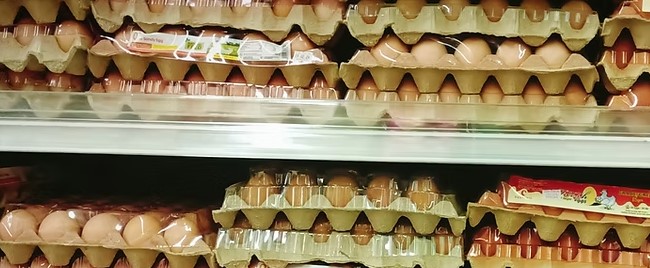
The UK food industry has responded to alleged government proposals for retailers to cap the prices of essential grocery items such as bread, eggs and milk in return for easing certain regulations.
According to reporting by the Financial Times, the government has put pressure on UK supermarkets to voluntarily freeze prices of grocery staples in exchange for incentives such as easing of packaging regulations and delays to healthy food policy changes.
This comes as the latest inflation data shows the annual rate of food price rises climbed higher than the overall inflation rate last month, rising above 3%.
Treasury minister Dan Tomlinson has denied claims the government is looking at bringing in price caps.
Though reportedly suggested as a voluntary measure rather than mandatory legislation, several key figures in the food industry have reacted with strong criticism, including executives at retailers M&S and Ocado.
A spokesperson from the Food and Drink Federation said it is “not clear how these proposals would work in practice,” commenting: “Government needs to focus on the root causes of rising food inflation, not the symptom.“
The spokesperson added: “For food and drink manufacturers, we need government to prioritise regulation so it doesn’t all come at once, and ensure it’s going to have the intended outcome. Too much regulation is too complex and too costly to implement, which is taking up businesses' time, resources and focus while they're also grappling with a global energy shock.”
Jan Schneiderbanger, Partner at LEK Consulting, said a request to hold prices must be reconciled with a cost base that policy has actively raised.
“If retailers comply, the cost has to land somewhere – there is limited room for further margin compression, so freezing prices on certain lines is likely to result in higher prices on the rest of the basket, or in lower payments to suppliers and farmers.”
He added that supply chain resilience and cyber security are additional concerns to consider, with these areas funded from the same margin pool that a freeze would compress.
“The 2025 cyber attacks on M&S and the Co-op illustrated both the scale of investment now required to operate a modern grocery business safely, and the disruption consumers face when that investment proves inadequate,” Schneiderbanger said.
“Compressing margins in the short term reduces the sector's capacity to invest in the resilience that protects consumers over the long-term, including against the kind of supply shocks that current Middle East disruption is already creating.”


comments


Other categories
Recent Comments