


Abhishek Banerjee entered the political turf in 2011, the same year that saw a historic shift in Bengal's power dynamics.
Abhishek Banerjee formally stepped into politics in 2011. But long before, in 1990, his aunt and three-time chief minister of West Bengal, Mamata Banerjee, had spotted a knack in him that would manifest as one of her Trinamool party's biggest faces decades later.
Fast forward to 2026, nearing his forties, Abhishek has grown into one of Bengal's frontline leaders. After years of learning the game that is politics from a gutsy and feisty champion of grassroots politics like his aunt, he has stepped out of her shadow.
There has been no dearth of dynastic politics barbs, or in Bangla, the 'bhaipo' (nephew) taunts. But Abhishek hasn't shied away from claiming what's his. He has claimed his space in a party formed by his aunt.
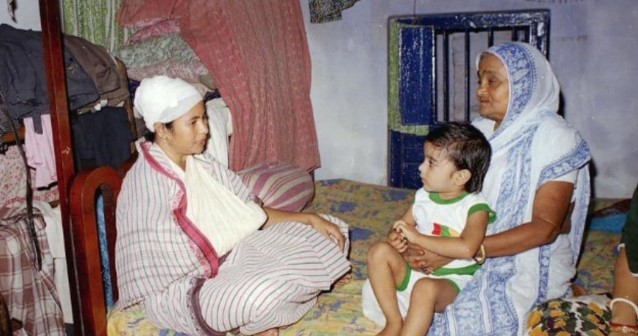
Even if Trinamool is not looking for a successor for Mamata yet, Abhishek has announced his arrival.It is 1990. Her head bandaged, Mamata Banerjee is seen on a bed. Facing her is her mother. In her lap sits a two-year-old Abhishek, curiously staring at his aunt as she narrates how she suffered injury in an attack by CPM workers. This scene is captured in an iconic photo that Mamata had gifted her nephew at a public rally decades later.
After that 1990 day, Banerjee recalled at the rally, a toddler Abhishek used to shout slogans in the house, demanding 'answers' from the CPM, why his aunt had been attacked. "He had been politically aware since that day," the chief minister had remarked at the rally in 2023.
Turning Point 2011
Abhishek Banerjee entered the political turf in 2011, the same year that saw a historic shift in Bengal's power dynamics. The Left fortress had collapsed after 34 years. The Trinamool was in power, and his aunt was the chief minister. Just 23 at that time, he was also appointed the national president of the All India Trinamool Youth Congress. His rise within the party was swift, characterised by a focus on professionalising the party's grassroots machinery, in a departure from the more emotive, street-fighter style of the senior leadership.
In 2014, he made his Lok Sabha debut, marking his entry into electoral politics. Elected from the Diamond Harbour constituency, he had become the youngest MP in the 16th Lok Sabha. He was 26.
Over the years, his growth reflected in his personal mandate, and his margin of victory became a metric of his clout. In 2014, he had won by a margin of just 71,000 votes. 2019 saw a massive BJP surge in Bengal, but he still managed to increase his margin to over 3.2 lakh votes. 2024 was a landmark. He shattered all records by winning by a margin of over seven lakh votes.
By 2021, his influence was institutionalised within the party. He was named the Trinamool General Secretary. Though never said in as many words, it was clear that he had been chosen as the primary face of the party's national ambitions and its fiercest defender against the BJP boom.
His political career spanning over a decade also saw corruption allegations. He has been questioned by central agencies in the multi-crore cash-for-jobs scam and the coal pilferage scam.
The 2026 Challenge
For Abhishek Banerjee, 2026 isn't just another election. For him, it's survival. It's about proving to his aunt that he matters in Bengal's politics. And that too after what had appeared to be nothing less than a rift between the old-timers and Abhishek's younger minds at work in the party.
The rifts appear to be in the past now. A well-crafted strategy is now in place in Trinamool that accords the necessary roles to both the Banerjees. While Senior holds the fortress in Kolkata, balancing administration and politics, Junior is the voice of her aunt in distant villages in the election season.
When Mamata focuses on the North, Abhishek campaigns in the South. He is also one of the Trinamool's main voices in Delhi, tasked with cornering the BJP and the government over contentious issues in Parliament.
Crucial to this election, Abhishek Banerjee brings a data-driven, youth-oriented strategy that could push Trinamool ahead in close contests by effective booth-level management and an efficient delivery of welfare schemes.
In the 2026 election narrative, he is positioning the Trinamool Congress not just as a regional power, but as a modern and digitally-savvy force that is capable of resisting the BJP's organizational might.
This is his litmus test: his first state election as a party general secretary, and a prized opportunity to announce to the world he has come out of the shadows of his mighty aunt to become the face of state politics.


comments


Other categories
Recent Comments