


From higher water bills and increased fire safety charges to costlier property transactions and a marginal rise in liquor prices, both households and businesses will face added financial pressure.
With the new financial year kicking in today, tricity residents, especially those living in Chandigarh, are set to feel a dent in their wallets as a series of revisions will come into effect, making everyday life more expensive. From higher water bills and increased fire safety charges to costlier property transactions and a marginal rise in liquor prices, both households and businesses will face added financial pressure.
Collector rates hit the roof
The biggest impact is set to be seen in the real estate sector as the UT administration has notified revised collector rates with hikes ranging from 8% to 22% across residential, commercial and agricultural categories (see box). Since these rates determine the minimum value for property registration, any upward revision directly impacts stamp duty and registration charges, translating into higher costs for buyers and investors.
Good luck keeping your head above water
Water tariffs have also been increased by 5%, raising costs for both domestic and non-domestic users. The revised slab rates will lead to higher monthly bills across consumption categories, while institutional, commercial and government establishments will also pay more per kilolitre.
Fire certificate to burn a hole in your pocket
In another move, the Chandigarh municipal corporation has raised fire safety certificate (FSC) charges by 10% across most building categories. The revision, aligned with the National Building Code, 2016, will increase compliance costs for residential, commercial and industrial buildings. The certificates will remain valid for three years.
Mild cheers!
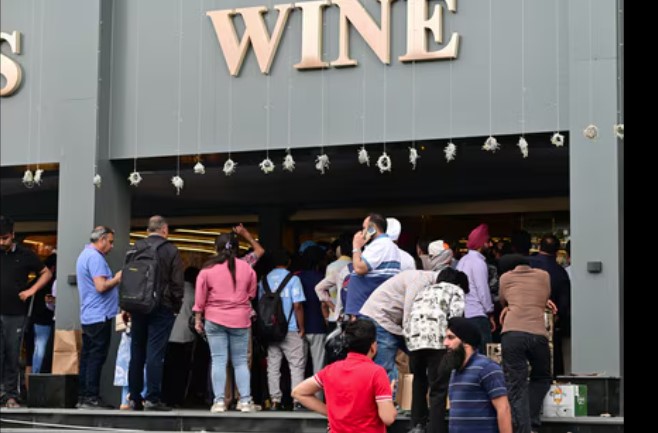
Liquor prices, meanwhile, will see a modest rise of up to 2% under the new excise policy for 2026-27. The hike, attributed to rising input costs and inflation, will slightly raise prices of country liquor, Indian-made foreign liquor, beer and Indian wines, while imported liquor and premium beverages remain unchanged. What it means is that a bottle currently priced at around ₹500 may cost ₹10 to ₹15 more, while premium liquor priced near ₹2,000 could see an increase of roughly ₹40 to ₹45 per bottle.
Here’s where you can save up…
In some relief for Chandigarh residents, the administration is offering a rebate for those paying property taxes between April 1 and May 31. For commercial properties, a 10% rebate is being offered while for residential properties, a 20% rebate is up for grabs. This financial year (2025-26), the Chandigarh municipal corporation is expecting to generate a revenue of around ₹90 crore through property tax collection.
Development charges up in Mohali
Those eyeing properties in City Beautiful’s satellite cities will also feel the pinch as the development charges, land-use charges and licence fees have been raised by 10% in Mohali while in Panchkula, the collector rates have been hiked marginally.
Development charges are the fees levied by local municipal authorities on developers when a building permit is obtained for new construction, such as houses, commercial, or industrial buildings. These fees are designed to fund the infrastructure required to support the new development, such as roads, water, sewers, and community facilities. A hike in development charges will impact buyers indirectly, as the property costs will rise accordingly.
In Mohali, promoters of residential colonies will now pay about ₹1.05 crore per acre as development charges, while group housing projects will incur around ₹3.39 crore. Commercial project charges will rise to approximately ₹2.33 crore.
However, in some relief for Mohali residents, there is no rise in collector rates, property tax rates, or water/garbage rates.
Dreaming of a home in Panchkula? Shell out more
In Panchkula, the collector rates for 2026-27 were finalised at a meeting held under the chairmanship of deputy commissioner Satapal Sharma on Tuesday. The final rates were, however, not uploaded on the official website of the Panchkula administration at the time of filing of the report. The hike, particularly in the commercial segment, is steep as per the draft collector rates (see box).
The residents’ welfare association (RWA) of Sector 20 on Tuesday raised strong objections to the proposed collector rates, stating that such a steep increase would shatter a common man’s dream of owning a house in Panchkula while also discouraging industrial growth in Haryana. In a representation to the chief minister and the revenue minister of Haryana, the association has urged the government to review and withdraw the hike in the larger public interest.
KK Jindal, president of the RWA, Sector 20, said that the sharp increase in collector rates within a short span of just seven months will adversely impact the general public, particularly the economically weaker sections (EWS) and the middle class. The association pointed out that the collector rates were last revised in August 2025, and there is no justified reason for another hike within such a limited timeframe.The letter further stated that earlier, it was a common practice to review collector rates after a gap of three years, but now the government has been revising them frequently within short intervals. The RWA termed the latest revision as arbitrary, claiming that it lacks any solid basis or standard yardstick.


comments


Other categories
Recent Comments