


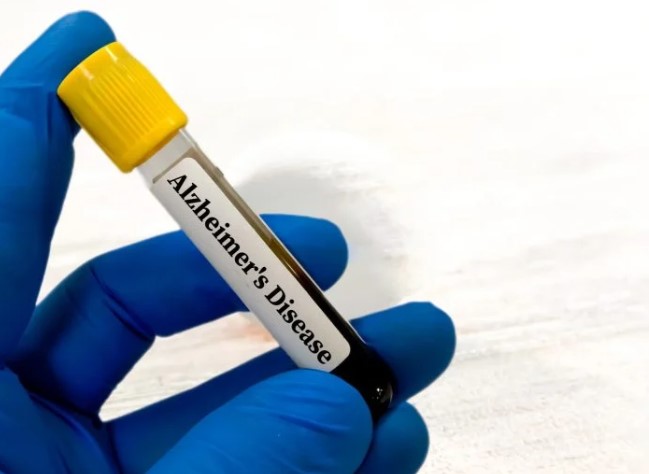
A new blood test could predict when Alzheimer’s will strike — years before symptoms begin.
Scientists at Washington University School of Medicine in St. Louis have created a way to estimate when a person is likely to begin showing symptoms of Alzheimer’s disease using a single blood test.
In research published today (February 19) in Nature Medicine, the team reported that their predictive models were able to estimate the timing of symptom onset within about three to four years. This level of accuracy could help researchers design faster and more targeted clinical trials for preventive Alzheimer’s therapies. It may also eventually help doctors identify people who are most likely to benefit from treatment before memory problems begin.
Alzheimer’s affects more than 7 million Americans. According to the Alzheimer’s Association, the cost of caring for people with Alzheimer’s and other dementias is expected to approach $400 billion in 2025. Although there is currently no cure, tools that forecast when symptoms might appear could improve efforts to delay or prevent the disease.“Our work shows the feasibility of using blood tests, which are substantially cheaper and more accessible than brain imaging scans or spinal fluid tests, for predicting the onset of Alzheimer’s symptoms,” said senior author Suzanne E. Schindler, MD, PhD, an associate professor in the WashU Medicine Department of Neurology. She added that such models could shorten the time needed to evaluate preventive treatments in clinical trials.
“In the near term, these models will accelerate our research and clinical trials,” she said. “Eventually, the goal is to be able to tell individual patients when they are likely to develop symptoms, which will help them and their doctors to develop a plan to prevent or slow symptoms.”
The p-tau217 Protein and the Alzheimer’s Clock
The research was conducted as part of a project launched by the Foundation for the National Institutes of Health Biomarkers Consortium, a public-private partnership that includes WashU Medicine.
The predictive models rely on measuring a protein called p-tau217 in plasma, the liquid portion of blood. By analyzing levels of this protein, researchers can estimate the age at which a person may start to experience symptoms of Alzheimer’s. Currently, p-tau217 testing is used to help diagnose Alzheimer’s in people who already have cognitive impairment. It is not recommended for people without symptoms outside of research or clinical trials.
To determine how long it typically takes for symptoms to appear after p-tau217 levels rise, Schindler and lead author Kellen K. Petersen, PhD, an instructor in neurology at WashU Medicine, examined data from 603 older adults who were living independently. Participants were drawn from two long running research efforts, the WashU Medicine Knight Alzheimer Disease Research Center (Knight ADRC) and the Alzheimer’s Disease Neuroimaging Initiative (ADNI), which operates at multiple sites across the U.S.
Validated Across Multiple Alzheimer’s Blood Tests
In the Knight ADRC group, plasma p-tau217 was measured using PrecivityAD2, a commercially available Alzheimer’s blood test developed by C2N Diagnostics. C2N is a WashU startup co-founded by WashU Medicine researchers David M. Holtzman, MD, the Barbara Burton and Reuben M. Morriss III Distinguished Professor, and Randall J. Bateman, MD, the Charles F. & Joanne Knight Distinguished Professor of Neurology. Both are coauthors of the study. In the ADNI group, p-tau217 levels were measured using tests from other companies, including one cleared by the U.S. Food and Drug Administration.
Previous research has shown that plasma p-tau217 closely tracks the accumulation of amyloid and tau in the brain, as evidenced by PET imaging. Amyloid and tau are abnormal proteins that accumulate years before memory loss begins and are considered defining features of Alzheimer’s disease.
“Amyloid and tau levels are similar to tree rings — if we know how many rings a tree has, we know how many years old it is,” Petersen said. “It turns out that amyloid and tau also accumulate in a consistent pattern and the age they become positive strongly predicts when someone is going to develop Alzheimer’s symptoms. We found this is also true of plasma p-tau217, which reflects both amyloid and tau levels.”
Accuracy Within Three to Four Years
The models estimated the age at which symptoms would begin with an average margin of error of three to four years. The findings also showed that age matters. Older adults tended to develop symptoms sooner after their p-tau217 levels rose compared with younger individuals. This pattern suggests that younger brains may tolerate Alzheimer ’s-related changes longer, while older adults may experience symptoms at lower levels of underlying pathology.
For example, someone whose p-tau217 levels became elevated at age 60 developed symptoms about 20 years later. In contrast, a person whose levels rose at age 80 typically developed symptoms within 11 years.
The researchers also confirmed that their model performed well across various p-tau217-based tests beyond PrecivityAD2, supporting the robustness and broader applicability of the approach.
To encourage further work in this area, the team made their model development code publicly available. Petersen also created a web-based application that allows other scientists to explore and test the predictive clock models in more detail.
“These clock models could make clinical trials more efficient by identifying individuals who are likely to develop symptoms within a certain period of time,” Petersen said. “With further refinement, these methodologies have the potential to predict symptom onset accurately enough that we could use it in individual clinical care.”
He noted that other blood biomarkers are also linked to cognitive decline in Alzheimer’s disease. Future research may combine additional markers to improve the precision of symptom onset predictions.
The findings come from the Foundation for the National Institutes of Health (FNIH) Biomarkers Consortium “Biomarkers Consortium, Plasma Aβ and Phosphorylated Tau as Predictors of Amyloid and Tau Positivity in Alzheimer’s Disease” Project. The work was supported scientifically and financially by industry, academic, patient advocacy, and government partners. Funding partners included AbbVie Inc., Alzheimer’s Association®, Diagnostics Accelerator at the Alzheimer’s Drug Discovery Foundation, Biogen, Janssen Research & Development, LLC, and Takeda Pharmaceutical Company Limited. Private sector funding was managed by the Foundation for the National Institutes of Health.
The Biomarkers Consortium, Plasma Aβ and Phosphorylated Tau as Predictors of Amyloid and Tau Positivity in Alzheimer’s Disease Project was carried out through a public private partnership overseen by the Foundation for the National Institute of Health (FNIH) and funded by AbbVie Inc., Alzheimer’s Association®, Diagnostics Accelerator at the Alzheimer’s Drug Discovery Foundation, Biogen, Janssen Research & Development, LLC, and Takeda Pharmaceutical Company Limited. Statistical analyses were supported by National Institute on Aging grant R01AG070941.
Data used in preparation of this article were obtained from the Alzheimer’s Disease Neuroimaging Initiative (ADNI) database (adni.loni.usc.edu). As such, the investigators within the ADNI contributed to the design and implementation of ADNI and or provided data but did not participate in analysis or writing of this report.


comments


Other categories
Recent Comments